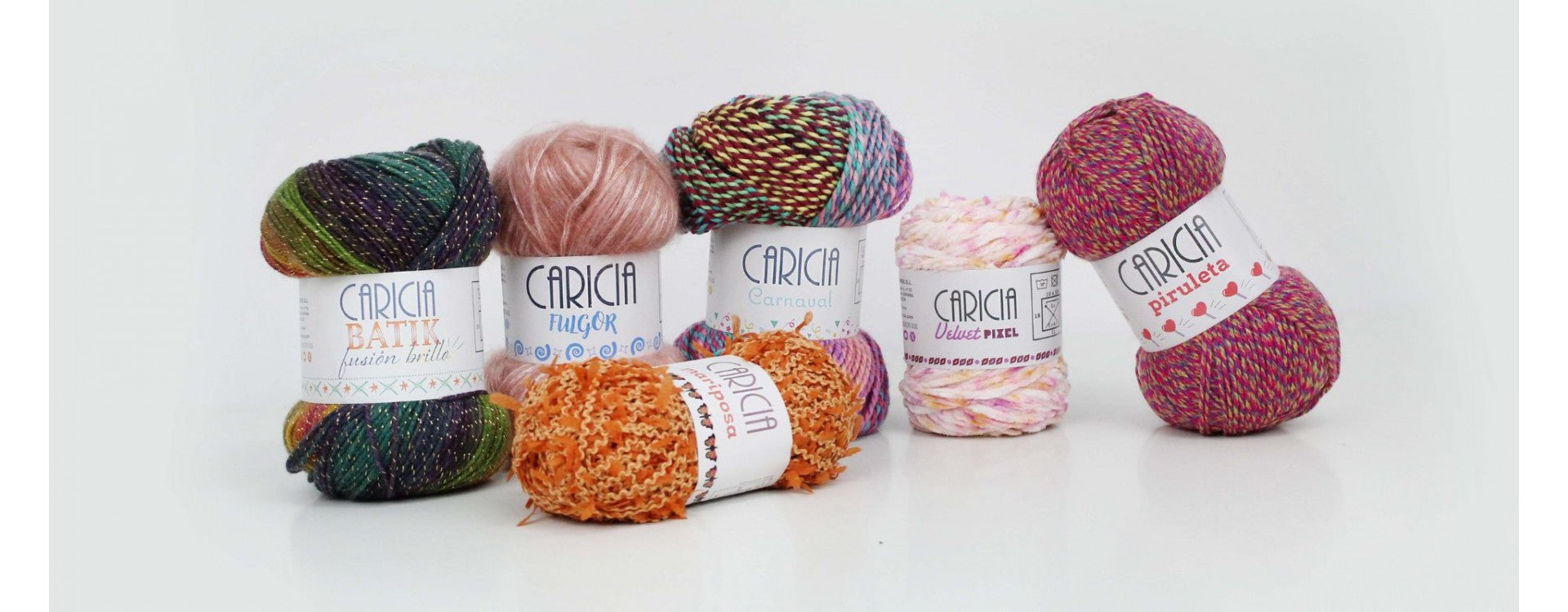
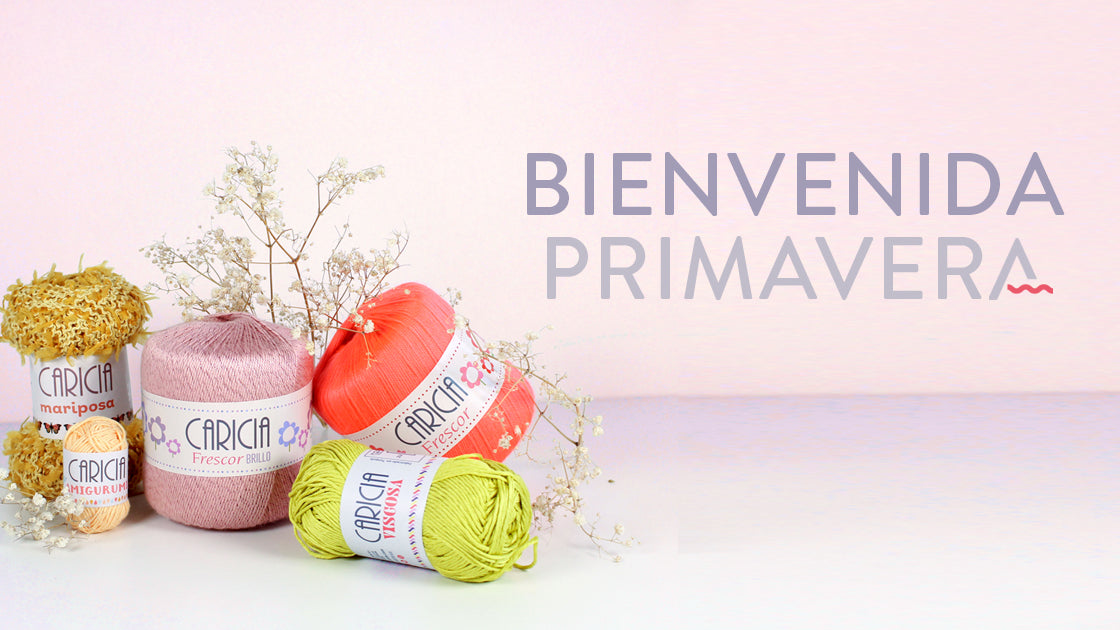
Natural fibers are a choice that takes care of both you and the planet. Why? Because they come directly from nature, whether from plants or animals. And best of all, they don't go through intensive chemical processes.
Below, we tell you what natural fibers are and what their main properties and benefits are when using them in your crafts.
What are natural fibers?
As we mentioned, natural fibers are those that come directly from nature. Without artificial additives. They are extracted from plants like cotton or linen, or from animals like sheep (which give us that warm and pleasant wool).

Furthermore, by not requiring chemicals or complex processes to give us the results we love in our work, they are especially environmentally friendly.
Types of natural fibers
Plant fibers
-
Cotton: the star of natural fibers. Cotton is super soft, comfortable, and versatile. At Caricia, we recommend it for everything, from cardigans to blankets, and it's ideal because it lets the skin breathe. If you like cotton yarns, our qualities Caricia Nature Clásica, Caricia Nature Sport, Caricia Mix Batik and Caricia Primavera will delight you. Although if you are looking for 100% cotton, Caricia Amigurumi and our Zepelines Perlé are the highest quality option in our catalog.
-
Linen: if you've tried linen clothing in summer, you know what we're talking about. This natural fiber is cool, resistant, and perfect for hot days.
-
Hemp: did you know that hemp is one of the most sustainable fibers? It grows fast, doesn't need much water, and will make your projects super durable.
-
Bamboo: it has become very popular lately, and for good reason. Bamboo is soft, has antimicrobial properties, and its contact with the skin is very pleasant.
-
Ramie: another very resistant plant fiber used to make shiny and fine fabrics. It is native to ancient Asia and is often used as a plant alternative to silk.
-
Jute: known as the "golden fiber" for its natural color and sustainability, it is mainly used to make bags, accessories, and decorative home items. In our online store, you will find this vegetable fiber in various colors.
Animal fibers
-
Wool: the best weapon against the cold, wool is warm and comfortable. It's also breathable, so it keeps you warm without making you sweat. Haven't you met ours yet? Some of the current favorites are Caricia Classic Merino and Caricia Sport Merino.
-
Silk: the queen of luxury. Silk is soft, shiny, and feels very pleasant on the skin.
-
Mohair: derived from the Angora goat, this natural fiber is the ideal option for knitting warm garments.
-
Alpaca: alpaca wool is soft, warm, and perfect for those with sensitive skin, as it is hypoallergenic.
Benefits of natural fibers
Natural fibers not only stand out for their ecological origin, but also for a series of properties that make them perfect for knitting.

Breathability and freshness
Imagine a fabric that keeps you cool in summer and warm in winter. That's what natural fibers are like.
They let your skin breathe and absorb moisture, meaning you won't feel sticky or uncomfortable. Cotton, for example, can absorb a lot of water before it feels wet, which is ideal for hot days.
Softness and comfort
If you like the feeling of softness against your skin, natural fibers are perfect.
Cotton and silk are like a caress, while wool and alpaca wrap you in a cozy and warm sensation.
Hypoallergenic
Do you have sensitive skin or suffer from allergies? Then you'll be glad to know that many natural fibers, such as organic cotton and wool, are hypoallergenic. They are ideal for people with delicate skin because they do not irritate and are much softer than synthetic fibers.
Planet-friendly
This is a big plus: natural fibers are sustainable and respectful of the environment.
They are biodegradable, come from renewable resources, and their production is usually less aggressive. So if you are concerned about leaving the smallest possible ecological footprint, choosing these fibers is a great step.
Resistant and durable
Some natural fibers, such as linen and hemp, are incredibly strong. They can withstand years of use without losing their shape or wearing out, which means your knitted garments made with these materials will last much longer.
Super versatile
From casual wear to home textiles, natural fibers adapt to everything.
You can use them to make anything from a summer dress to a warm blanket for colder nights.
Incredible thermal properties
If you live in a cold place, wool is your best friend.
Not only does it keep you warm, but it also regulates body temperature, so you won't feel suffocated. In warm climates, linen or cotton are perfect for keeping you cool.
The positive impact of choosing natural fibers
In addition to being comfortable and practical, by choosing natural fibers you are making a conscious choice for a more sustainable world. You are supporting ecological production and using products that care for both your skin and the environment.
Furthermore, with so many options available, there is always a perfect natural fiber for every occasion and every style.
Frequently asked questions about natural fibers

Why are natural fibers better than synthetics?
Natural fibers allow the skin to breathe, are biodegradable, and are more environmentally friendly. Additionally, they are softer and more comfortable to the touch.
Which fibers are best for people with allergies?
Organic cotton is one of the best options for those with sensitive skin, as it contains no harsh chemicals and is hypoallergenic.
How to properly care for garments made from natural fibers?
It is best to hand wash them with mild or neutral detergent, using cold or lukewarm water to avoid damage. Ideally, dry them outdoors, in the shade, and never use a dryer, as heat can deform them. To remove excess water, use a towel without wringing the garment. If ironing is necessary, do so at a medium temperature and inside out to avoid marks.
Do natural fibers remain natural after being dyed?
Yes, natural fibers retain their classification as "natural" even after being dyed. This is because the dyeing process does not alter the fundamental chemical composition of the fiber; rather, it is a surface process.
Choosing natural fibers is, in short, a decision that benefits the planet as much as it benefits you. Whether for knitting your new favorite garment or creating sustainable textiles for your home, this type of fiber will always be a good choice.
We recommend you take a look at all our qualities, try them, and experience for yourself the sensation of knitting with them. You'll get hooked, you'll see. And don't forget to follow us on social media!