One of the biggest challenges beginners face is learning how to read crochet patterns.
Crochet is a fascinating technique that allows you to create all kinds of garments, accessories, and decorations with just a hook and a yarn.
These patterns are like a map that guides you through every step of the project, but at first glance, they can seem complicated and overwhelming. Don't worry, in this article, we will explain step by step how to read crochet patterns so you can start crocheting with confidence.
What is a crochet pattern?
A crochet pattern is a written guide that describes the necessary steps to create a specific project, whether it's a hat, a scarf, a sweater, or any other garment or accessory. Patterns can include written instructions, diagrams, and abbreviations that indicate which crochet stitches to use and in what sequence. Learning to read and understand these patterns is crucial to following instructions correctly and achieving the desired results.
Basic elements of a crochet pattern
Before diving into how to read a crochet pattern, it's important to familiarize yourself with the basic elements that typically appear in these patterns. Here we explain some of the most common terms and sections you will find in a pattern:
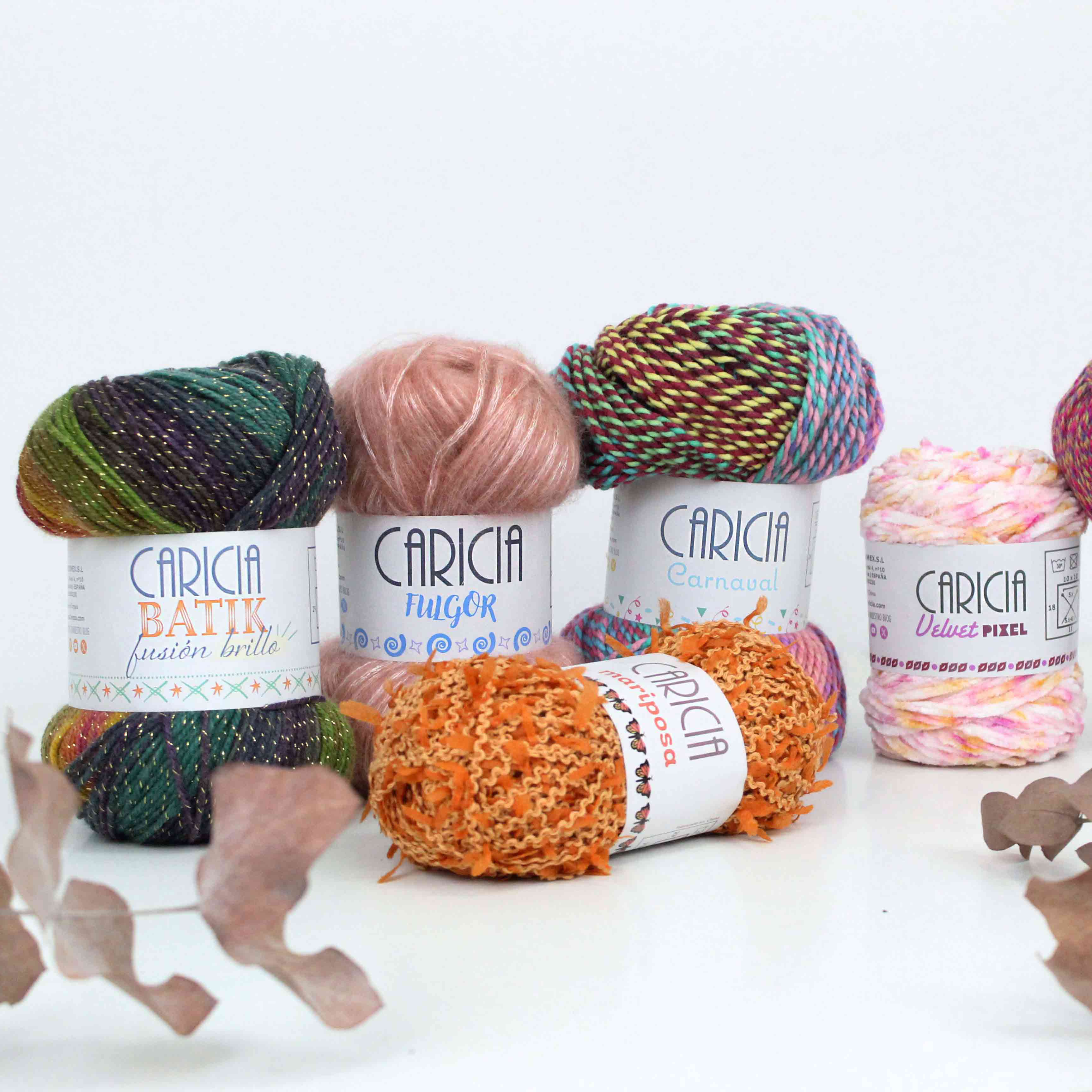
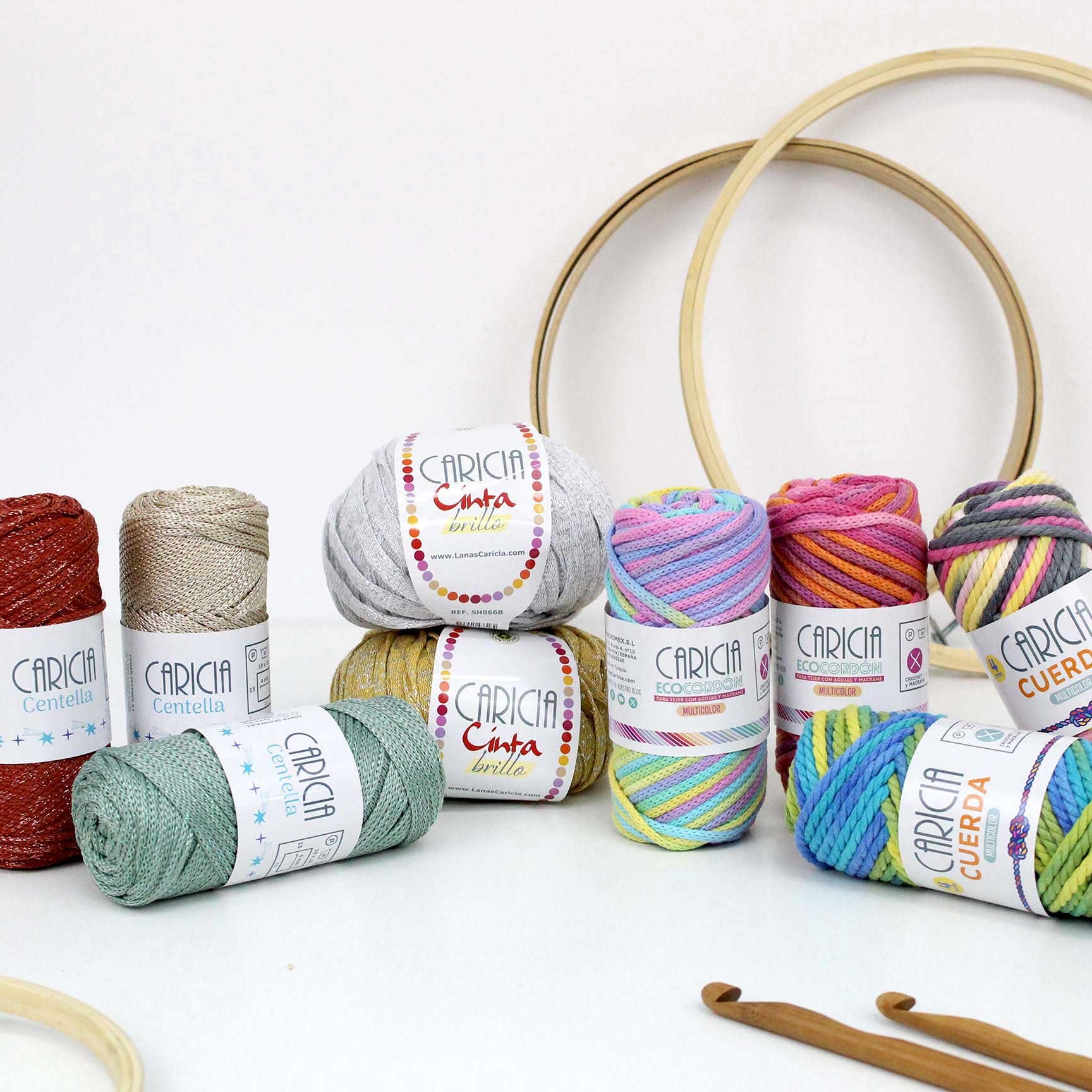
Materials: Most crochet patterns begin with a list of materials you will need to complete the project. This list usually includes the type of yarn or wool, the size of the hook, and any other necessary accessories, such as buttons, sewing needles, etc. At Lanas Caricia, we offer a wide variety of yarns so you can find everything you need for your crochet projects.
Abbreviations: Crochet patterns often use abbreviations to make instructions more concise. These abbreviations represent the different crochet stitches and techniques that will be used throughout the pattern. For example, "sc" means "single crochet", "dc" means "double crochet", and "inc" means "increase". Learning these abbreviations is essential to follow a pattern without problems.
Gauge indications: Gauge refers to how many stitches and rows you need to achieve a specific measurement. This information is crucial to ensure that your project has the correct size. Crochet patterns usually include a section called "gauge" or "swatch" that tells you how many stitches and rows should fit into a 10 cm x 10 cm sample. If your gauge does not match the pattern's, you may need to adjust your hook size or yarn tension.
Specific instructions: This is the main section of the pattern, where the steps to follow to complete the project are detailed. Instructions are usually organized into sections or parts, such as the body, sleeves, or edge of a garment. Each step is usually numbered or indicated with a bullet point, and instructions are generally sequential.
Diagrams: Some crochet patterns include diagrams that visually represent the stitches and crochet sequences. These diagrams are especially useful for more complex projects, as they allow you to see how the stitches should be organized in each row or round.
Notes and tips: Often, crochet patterns include helpful notes or tips that will guide you through the project. These notes can give you suggestions on how to adjust the size, how to join pieces, or how to customize the design.
How to read a crochet pattern step by step?
Now that you know the basic elements of a crochet pattern, it's time to learn how to read it. Here we guide you step by step so you can follow any pattern with confidence.
Read the entire pattern before starting: Before picking up your hook and starting to crochet, it is essential to read the entire crochet pattern from beginning to end. This will give you a general idea of what you need to do and allow you to identify any techniques or stitches you are not familiar with.
Familiarize yourself with the abbreviations: As we mentioned before, crochet patterns are full of abbreviations. Take the time to review the list of abbreviations that usually appears at the beginning of the pattern. If there is an abbreviation you don't recognize, be sure to look up its meaning before starting.
Prepare your materials: Once you understand the pattern and the abbreviations, gather all the materials you need. Make sure the hook size and yarn type you are using match those recommended in the pattern. If you decide to use a different yarn than suggested, keep in mind that this may affect the size and texture of the final project.
Check your gauge: Before starting the project, it's a good idea to crochet a swatch to check your gauge. Follow the instructions in the pattern's gauge section and measure the swatch to ensure it matches the indicated dimensions. If it doesn't match, try changing the hook size or adjusting your tension to align with the pattern.
Follow the instructions step by step: Now you are ready to start crocheting. Follow the pattern instructions step by step, making sure to pay attention to stitch indications, increases, decreases, and color changes. If the pattern includes a diagram, use it as a visual reference to ensure you are following the correct sequence.
Use stitch markers: If the pattern is especially long or complex, consider using stitch markers to help you keep your place. These small accessories are useful for marking the beginning or end of a round, or to indicate a point where you need to make an increase or decrease.
Do not skip notes and tips: Throughout the pattern, you will likely find notes or tips that will help you complete the project successfully. Do not ignore them, as they often contain valuable information on how to customize the project or how to avoid common mistakes.
Check your work regularly: As you progress through the project, check your work regularly to ensure everything is going as planned. If you notice something doesn't look right or you've made a mistake, don't hesitate to undo a few rows and correct it. It's better to fix a mistake early than to continue and risk the final project not meeting your expectations.
Blocking and finishing: Once you finish crocheting, many crochet projects require a blocking process to shape them and ensure the dimensions are correct. Blocking involves wetting the garment and stretching it over a flat surface, pinning it until it dries. This step is crucial for the project to look professional and have the right size.
Tips on how to read crochet patterns in different languages
You may encounter crochet patterns written in other languages, especially English. Fortunately, crochet stitches are named similarly in most languages, although abbreviations may vary. Here are some tips for reading crochet patterns in other languages:
Learn English abbreviations: Many English abbreviations are similar to Spanish ones, but with some differences. For example, "sc" in English means "single crochet", which is equivalent to "pb" or "punto bajo" in Spanish. Familiarize yourself with these abbreviations so you can follow English patterns without problems.
Use a crochet dictionary: If you encounter a pattern in a language you don't know, a crochet dictionary can be very helpful. These dictionaries allow you to look up specific crochet abbreviations and terms in various languages, so you can understand the pattern no matter what language it is written in.
Consult tutorials and videos: If you have difficulty understanding a pattern in another language, look for online tutorials and videos that show you how to make the stitches or techniques you need. Often, seeing how a stitch is made instead of just reading the description can help you better understand the instructions.
Reading crochet patterns may seem complicated at first, but with a little practice and patience, it will become an essential skill for your crochet projects. By following the steps and tips we have given you, you will be well on your way to creating beautiful garments and accessories with confidence. Explore our online store and start your next project today!
Frequently asked questions about how to read crochet patterns
How do you read crochet diagrams?
Crochet diagrams are read from bottom to top and from right to left for going rows, and from left to right for returning rows (in patterns worked in rows). Each symbol in the diagram represents a specific stitch, and it is crucial to familiarize yourself with the diagram legend to interpret it correctly. If the pattern is circular, the diagram will be read from the center outwards, following the arrows or numbers that indicate the sequence and direction in which it should be worked.
How to read crochet abbreviations?
Crochet abbreviations are simplifications of instructions to make patterns more compact and easier to follow. For example, "sc" means "single crochet" and "dc" means "double crochet". Each pattern should include a list of abbreviations used, but it is useful to know the most common ones: such as "ch" for chain, "inc" for increase, “hdc” for half double crochet, “tr” for treble crochet, “dec” for decrease, “rep” for repeat, and “sl st” for slip stitch.
What do crochet patterns mean?
Crochet patterns are detailed instructions that guide crocheters in creating a piece. These patterns can be in text, diagram, or a combination of both, and include details on stitch types, step sequence, and the number of stitches needed in each row or round. Understanding a pattern involves carefully following the instructions and adapting the project as necessary.
What does the asterisk mean in crochet patterns?
In crochet patterns, an asterisk (*) indicates the beginning of a section that needs to be repeated. Typically, you will see something like "make 2 double crochets, 1 chain, repeat from * to the end of the row." This means you will repeat the sequence between asterisks as many times as indicated in the pattern. This symbol is key to understanding repetitions and ensuring the work has the correct shape and size.
What is the difference between crochet and ganchillo?
The difference between crochet and ganchillo is purely terminological; both terms refer to the same knitting technique that uses a hook to create interlaced fabrics. "Crochet" is the term used in English and other languages, while "ganchillo" is the term in Spanish. In essence, there is no difference in technique, only in the language used to describe it.
Sobre el autor
Equipo Lanas Caricia
Organization
At Lanas Caricia, we have been accompanying knitting and crochet enthusiasts for generations. We are part of a company with over a century of history specializing in wool, cotton, and craft yarns, and we share that expertise in every article—from step-by-step patterns and knitting and crochet techniques to material guides and inspiring ideas. Our goal is simple: to ensure every project you start is a success.
Albita de Plata brings us the trendy summer design with this versatile tote. Can you imagine the quality it's designed with? Exactly, our Caricia Yute, the perfect natural fiber for your handmade a...
The invisible stitch is one of those essential techniques that anyone passionate about sewing must master.
This stitch, as its name suggests, is practically imperceptible on fabric, making it the ...