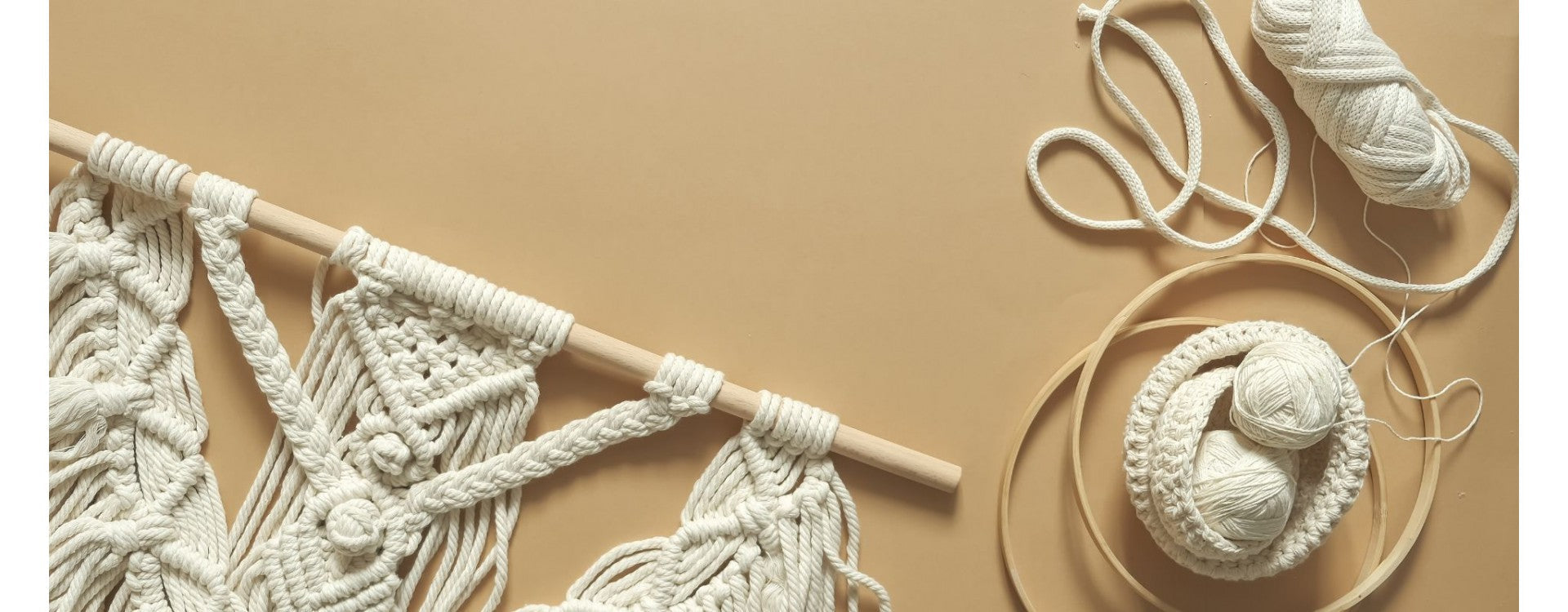
Types of macrame knots: explore key techniques for amazing designs
Do you want to know the most commonly used macramé knot types? Macramé is a manual weaving technique used to create patterns and designs with knots.
It's an ancient art form that has regained popularity in modern decor and fashion design. In this article, we'll explore the most commonly used macramé knot types, how to make them, and how we can incorporate them into our projects.
MACRAMÉ KNOT TYPES
To start, it's essential to know the basic macramé knot types, as they are the foundation of any macramé project. These knots are easy to learn and very versatile, allowing us to bring various projects to life.

Square Knot
The square knot is one of the most fundamental macramé knot types. It's used to create solid, flat structures and consists of a series of loops around a central cord.
How to make it?
- Divide four cords into two groups, with two cords in each group.
- Cross the right cord over the two central cords and under the left cord.
- Pass the left cord under the two central cords and through the loop created by the right cord.
- Adjust to tighten.
Spiral Knot
Another macramé knot type is the spiral knot, which creates a three-dimensional, wavy texture. It's used to add a decorative effect to our projects.
How to make it?
- Start as with the square knot, but always cross the cords in the same direction.
- This will cause the knot to twist and form a spiral.
Half Hitch Knot
The half hitch knot is one of the macramé knot types perfect for creating decorative edges and ruffles.
How to make it?
- Hold the working cord with one hand and with the other, wrap the cord around the base cord, creating a small loop.
- Pull the working cord through the loop and tighten.
- Repeat the process until the desired length is achieved.
Square Knot
Among the macramé knot types, the square knot is ideal for creating more rigid and square structures.
How to make it?
- Use four cords, as in the flat knot.
- Make a square knot, but alternate the direction of the crosses in each knot to maintain the square shape.
Lark's Head Knot
The lark's head knot is one of the most common macramé knot types for creating loops and anchor points.
How to make it?
- Fold a cord in half and place it behind the base cord.
- Pass the ends of the cord through the loop and tighten around the base cord.
MACRAMÉ KNOT TYPES: MORE COMPLEX AND DECORATIVE KNOTS
In addition to basic knots, there are many other more complex and decorative macramé knot types that we can use to add unique details to our projects:
- Filler knots: Used to fill spaces and create textures.
- Joining knots: Used to join different cords or create more elaborate patterns.
- Decorative knots: Used to create unique designs and patterns.

MACRAMÉ APPLICATIONS
Different macramé knots can be applied in a variety of projects, from home decor to fashion accessories. Here are some ideas.
Plant Hangers
One of the most popular uses of macramé knots is in creating plant hangers. These hangers are not only functional but also add a bohemian and natural touch to any space. To make a plant hanger, we use square and spiral knots, two macramé knot types that provide a strong and decorative structure.

Wall Hangings
Wall hangings are another excellent way to use macramé knot types. By combining half hitch and square knots, we can create intricate patterns and textures that will make any wall stand out.
Jewelry and Accessories
Macramé is also used to make jewelry such as bracelets, necklaces, and anklets. Smaller, more detailed knots, like the lark's head knot, are ideal for these projects. Additionally, we can incorporate beads and other embellishments to personalize our creations.
TIPS FOR BEGINNERS
If you're starting out with macramé knot types, follow these tips to make your learning easier:
- Practice basic knots: Before diving into large projects, master all basic macramé knot types. This will give you a solid foundation for more complex projects.
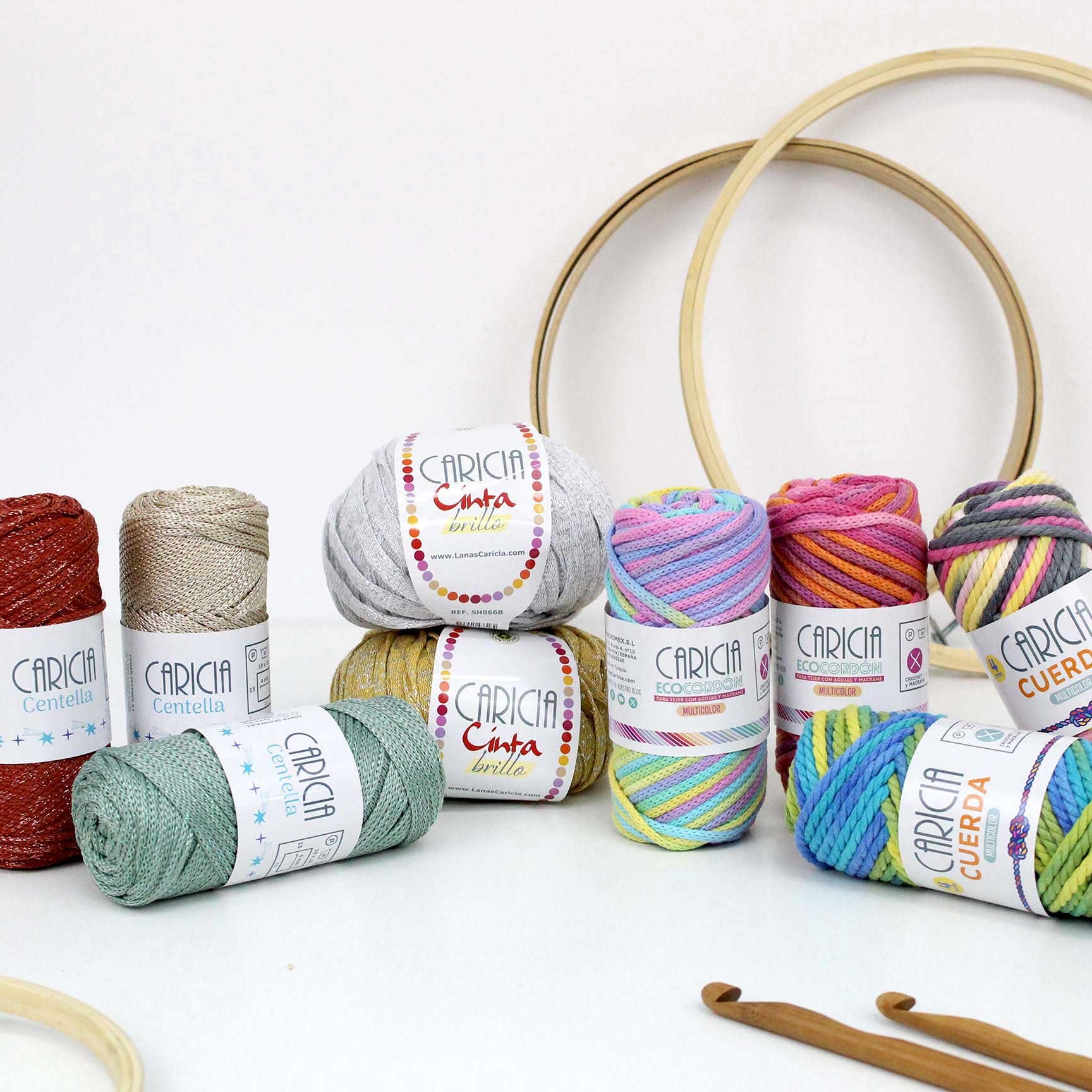
- Use good quality cord: The quality of the cord you use can make a big difference in the final result. Look for sturdy cotton cord that is easy to handle.
- Maintain consistent tension: Uniform tension in your knots is key to achieving a clean and professional finish. Practice maintaining the same tension in each knot.
- Follow tutorials: There are many online tutorials that can guide you step-by-step in creating different macramé projects. Don't hesitate to use them as a reference.
- Be patient: Macramé can be a slow and detailed process, but with patience and practice, we will improve over time. Enjoy the process and don't get discouraged if our first attempts aren't perfect.
ADDITIONAL RESOURCES
If you're interested in learning more about different macramé knot types, here are some additional resources that may be helpful:
- Books: There are many books dedicated to macramé that offer detailed instructions and inspiring projects.
- Video tutorials: Platforms like YouTube have video tutorials that explain step-by-step how to make different macramé knot types.
- Online communities: Join online communities, such as Facebook groups or macramé forums, where you can share your projects, get advice, and find inspiration.
START IN THE MACRAMÉ WORLD
Macramé is an incredibly versatile and rewarding weaving technique. With just a few basic knots, we can create a wide variety of beautiful and functional projects. We hope this guide has inspired you to explore the art of macramé and that you enjoy the process of learning and creating.
To stay up-to-date with all our news, follow us on Instagram.
Discover our wide variety of colors and skeins for macramé.